

How to prepare for a nuclear emergency
A comprehensive survival guide tailored for families, beginners, and experienced preppers across the UK. Learn the immediate protective actions, shielding protocols, and essential equipment required to stay safe during a radiological incident.
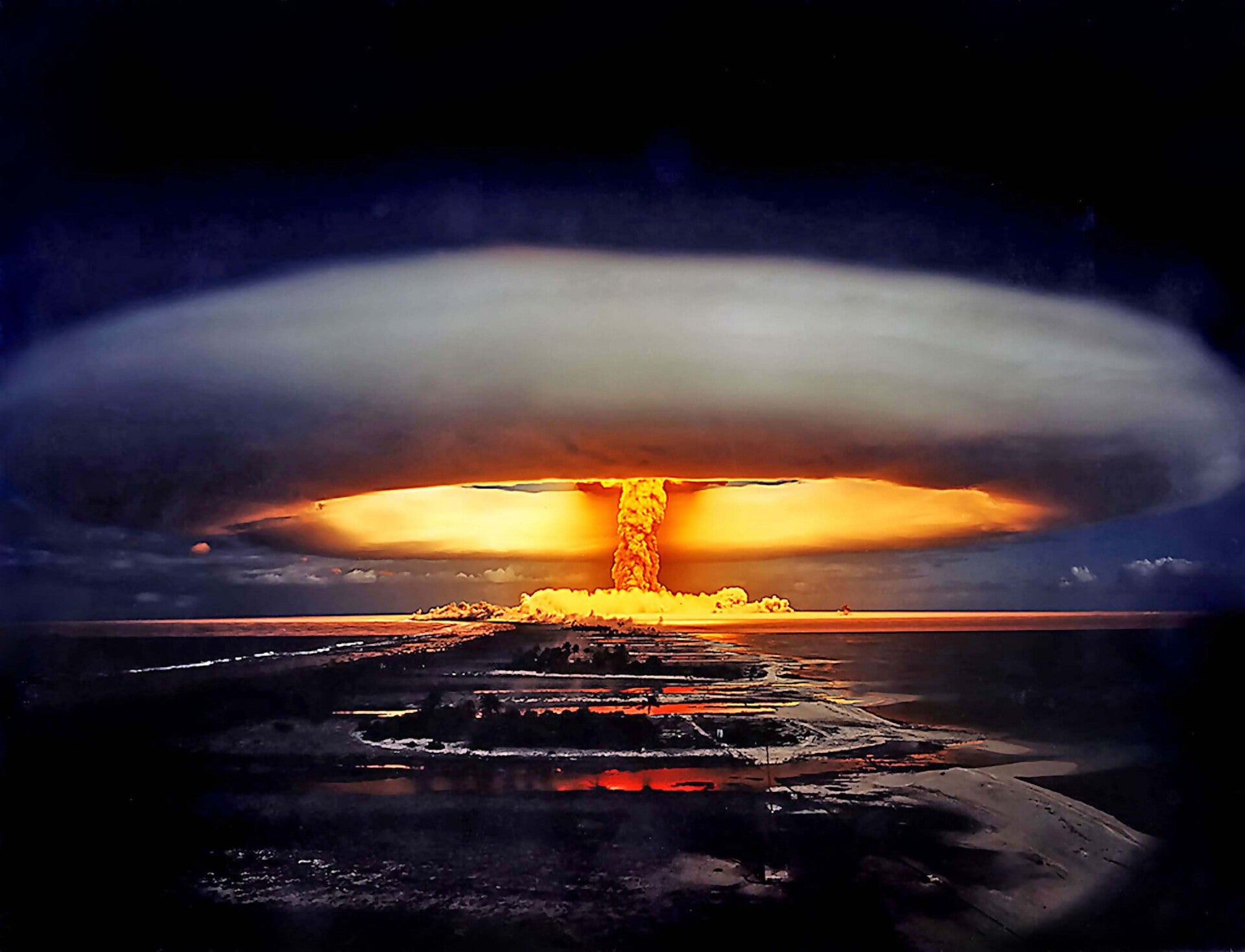
Immediate actions during a blast
The very first minutes are critical. If you are outdoors, lie face down immediately on the ground to shield against blast waves, cover your head, and never look directly at the flash. Move indoors as swiftly as possible into a substantial brick or concrete building. Once inside, seal all doors, windows, and exterior vents with heavy plastic sheeting and duct tape to block fallout particles. Keep a wind-up radio tuned to emergency broadcast stations for official guidance.


Essential emergency kit checklist
Build a dedicated kit ready before an emergency strikes. Vital supplies include a medical first aid kit, potassium iodate or iodine tablets, rolls of heavy duct tape, and durable tarpaulins or plastic sheeting. Equip every family member with N95 respirators or dust masks as a baseline, alongside lotion-free wet wipes, heavy-duty bin bags, spare changes of sealed clothing, and a wind-up emergency radio to stay informed.
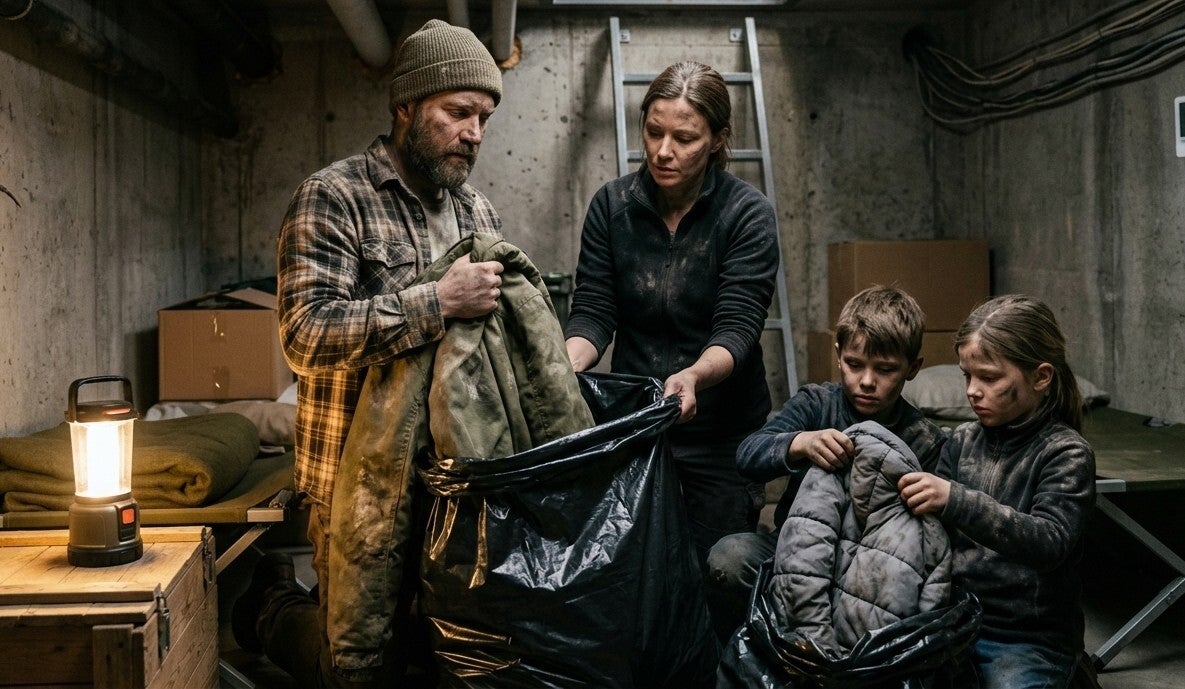
Shelter protocols and decontamination
If you suspect exposure before reaching shelter, remove outer clothing immediately and seal it securely inside heavy-duty bin bags to prevent radioactive contamination from spreading. Clean exposed skin and face gently with lotion-free wet wipes. Plan to remain sheltered in the interior-most room of your property for at least 24 to 48 hours while radiation levels drop significantly. Copy these checklists, consult our linked emergency guides, and maintain vigilance.
Nuclear attack and Radiation - Types and how to Prepare
Nuclear attack and Radiation.
There is no guaranteed safe place in the UK during a nuclear war because of blast radiuses, thermal radiation, and the widespread drift of radioactive fallout.
However, media analyses and defence discussions frequently point to remote, rural, northern, and coastal regions as comparatively safer than major cities, military hubs, or industrial centres due to lower population density and distance from primary strategic targets.
Types of Hazards in a Nuclear Attack
- Flash and Thermal Pulse: A blinding flash of light can cause temporary or permanent flash blindness from miles away. The thermal pulse (heat wave) causes severe skin burns, eye injuries, and ignites nearby flammable materials.
- Blast Wave: A high-pressure shock wave flattens buildings, shatters windows, and turns debris into dangerous projectiles.
- Initial Radiation: High-energy radiation emitted directly from the fireball causes severe cellular injury or death to anyone nearby outdoors.
- Radioactive Fallout: If the detonation hits near the ground, pulverized earth and debris are sucked into the mushroom cloud and fall back down as radioactive dust, which is most dangerous within the first few hours and days
- Get Inside Immediately: Go into the nearest sturdy brick or concrete building right away. Move to the basement or an interior room away from outer walls and windows.
- If Caught Outdoors: Do not look at the flash. Lie flat on the ground face-down, tuck your hands under your body, and cover your nose and mouth to protect against heat and flying debris. Once the shockwave passes, move to a proper shelter immediately.
- Seal Your Shelter: Close all doors, windows, and turn off external ventilation, air conditioners, or heaters that pull in outside air.
- Decontaminate: Remove your outer layer of clothing, which can eliminate up to 90% of radioactive particles. Shower and wash your hair thoroughly with soap and water (do not use hair conditioner, as it binds radioactive dust to your hair).
- Stay Indoors: Remain sheltered for at least 24 to 48 hours—or longer—until local emergency authorities or official guidelines via the GOV.UK Radiation Emergencies Guide or emergency broadcast state it is safe.
- Use Stable Iodine Only When Advised: Only take potassium iodide (stable iodine) tablets if specifically instructed by public health officials to protect your thyroid gland.
Food and Water Safety: Indoors, stored sealed food and mains tap water generally remain safe from fallout. Listen to battery-powered or hand-crank radios for updates
Fission Bombs (Atomic Bombs)
Fission bombs get their energy by splitting heavy atomic nuclei—such as uranium-235 or plutonium-239—in a rapid chain reaction.
- Gun-Type Fission Bomb: Uses conventional explosives to shoot one piece of subcritical uranium into another piece inside a tube, forming a critical mass. (Example: "Little Boy," dropped on Hiroshima in 1945).
- Implosion-Type Fission Bomb: Surrounds a hollow sphere (or "pit") of plutonium or uranium with high explosives. When triggered, the blast crushes the pit inward to make it dense enough to start a chain reaction. (Example: "Fat Man," dropped on Nagasaki in 1945).
- Boosted Fission Bomb: A fission weapon that contains a small amount of fusion fuel (deuterium and tritium) inside its core. The fusion reaction releases high-energy neutrons that speed up and intensify the splitting of the atomic nucleus
- Thermonuclear Bombs (Hydrogen Bombs)
Thermonuclear weapons—often called H-bombs—use the heat and energy from a primary fission explosion to ignite a secondary nuclear fusion reaction. Fusion forces light hydrogen isotopes (deuterium and tritium) to join together into heavier helium nuclei, releasing massive amounts of energy.
- Multi-Stage Thermonuclear Weapon: Uses radiation implosion where a fission primary ignites a secondary stage containing a fissile spark plug and fusion fuel (like lithium deuteride). These are vastly more destructive than basic atomic bombs.
- Operational Classifications
Weapons are also categorized by their range and target type:
- Strategic Nuclear Weapons: High-yield weapons designed to hit long-distance enemy targets like cities, military bases, or industrial centres. They are typically delivered via Intercontinental Ballistic Missiles (ICBMs), Submarine-Launched Ballistic Missiles (SLBMs), or heavy bombers.
- Tactical (Non-Strategic) Nuclear Weapons: Smaller, lower-yield weapons built for use on a specific battlefield or regional zone. These have historically included gravity bombs delivered by aircraft or cruise missile.
Energy and Radiation Distribution
An average nuclear detonation distributes its energy roughly as follows:
- Air Blast and Shock Wave (~50%): High-pressure winds and structural compression that crush buildings and create supersonic shockwaves.
- Thermal Radiation / Heat (~35%): Intense light and heat that cause severe flash burns, eye damage, and spontaneous fires.
- Nuclear Radiation (~15% total): Divided into initial (prompt) radiation and residual (delayed) radiation
Types of Nuclear Radiation
- Gamma Rays: High-energy electromagnetic waves that travel far and deeply penetrate human tissue and structures.
-
Neutrons: Subatomic particles released primarily during the first minute of detonation; they account for severe biological damage and can make surrounding soil and materials radioactive (neutron activation).
- Beta Particles: High-speed electrons emitted mostly during radioactive decay; dangerous primarily via direct contact or ingestion, with shorter ranges in open air.
- Alpha Particles: Helium nuclei (two protons and two neutrons); generally hazardous only if radioactive dust or fallout is inhaled or swallowed.
Radiation by Bomb Type
- Atomic Bombs (Fission Bombs)
- Mechanism: Splits heavy atomic nuclei (Uranium-235 or Plutonium-239).
- Yield: Measured in kilotons (thousands of tons of TNT equivalent, e.g., 15–20 kilotons like Little Boy and Fat Man).
- Radiation Profile: Produces a standard mix of prompt gamma/neutron radiation and significant radioactive fission products that form heavy local and global fallout.
- Thermonuclear Bombs (Hydrogen / Fusion Bombs)
- Mechanism: Uses a fission atomic bomb as a trigger to ignite a secondary nuclear fusion reaction (hydrogen isotopes).
- Yield: Measured in megatons (millions of tons of TNT equivalent; thousands of times more powerful than standard fission bombs).
- Radiation Profile: Massive blast and thermal output. While fusion itself is "cleaner" per unit of energy, the massive fission trigger and secondary stages still create substantial initial radiation and long-term radioactive debris.
- Enhanced Radiation Weapons (Neutron Bombs)
- Mechanism: A specialized, compact thermonuclear weapon designed to suppress the physical blast wave while leaking maximum lethal radiation.
- Radiation Profile: Emits a high-intensity burst of prompt neutron and gamma radiation capable of penetrating armoured vehicles and concrete at shorter distances, with a much smaller thermal and physical blast footprint and reduced long-term fission fallout.
- Radiological / Dirty Bombs (Non-Nuclear Blast)
- Mechanism: Not true nuclear weapons; they use conventional explosives (like TNT) wrapped in radioactive isotopes.
Radiation Profile: Does not produce a nuclear chain reaction, critical fireball, or thermal flash. The "radiation blast" is merely the mechanical dispersal of radioactive dust meant to cause psychological panic, low-level surface contamination, and area denial.
The main types of Detonation.
High Altitude Burst
Detonation above 100,000 feet. Destructive forces do no significantly affect the ground.
Air Burst
The fireball does not touch the ground. Detonation is below 100,000 feet.
Surface Burst
Detonation occurs at or slightly above the actual surface of the earth. One of the greatest results of this type of burst is the amount of radioactive debris, and fallout, and the force of the blast wave.
Sub-surface Burst
Detonation occurs underground or under water. Depth determines destructive forces on the surface.
CDC – Radiation Emergencies - Nuclear Weapon
https://www.cdc.gov/radiation-emergencies/infographic/nuclear-weapon.html
Shelter-in-Place & Decontamination Gear
- Plastic Sheeting and Duct Tape: To seal cracks, doors, and vents if you are ordered to seal an interior room.
- Dust Masks / N95 Respirators: To help filter out fine dust and particles if you must move or go outside briefly.
- Lotion-Free Wet Wipes & Soap: For washing skin and hair if exposed to radioactive dust (avoid conditioners, which can bind radioactive particles to hair).
- Change of Clothes: Extra sets of clothing and spare shoes that can be bagged if outer layers become contaminated.
- Garbage Bags: Heavy-duty trash bags to safely seal away contaminated clothing or waste.
To Sum up and what you can do to protect you and the family.#
- Immediate Action (First 10–15 Minutes)
- Go inside: Move into the nearest solid building made of brick, stone, or concrete. If you are already inside, stay there. Do not try to travel home or pick up family members from schools, nurseries, or workplaces—they are safer remaining where they are.
- Avoid the blast flash: If you are outdoors during a detonation, do not look at the flash (it can cause blindness). Lie flat on the ground, face down, and cover your head and hands.
- Seal your shelter: Go to the basement or the centre of the building, far away from outer walls, roofs, and windows. Close all windows and doors, turn off fans, air conditioners, and heating units, and close fireplace dampers.
- Decontamination (Once Sheltered)
Remove outer layers: Taking off your outer layer of clothing removes up to 90% of radioactive dust and particles. Place the clothes in a plastic bag and seal it away from people and pets.
- Wash thoroughly: Take a shower with warm water and mild soap to wash exposed skin and hair. Do not use hair conditioner; it binds radioactive particles to your hair.
- Clean pets: If pets were outside, gently wash them with soap and water.
- Food, Water, and Medical Safety
- Food and water: Consuming food from sealed containers, cans, or packages is safe. Mains tap water is generally safe immediately following an incident until local authorities issue specific advisories. Wipe down food containers or cans before opening them.
- Potassium iodide (KI): Only take stable iodine or potassium iodide tablets if explicitly instructed to do so by public health or emergency officials. Taking them incorrectly can be harmful.
- Communication and Staying Informed
- Tune in: Use a battery-powered, solar, or hand-crank AM/FM radio, or a mobile device (if networks work) to listen to official updates from emergency services or government channels.
- Keep lines free: Do not call emergency services unless you have a life-threatening medical emergency, so phone lines remain open for responders.
- Stay put: Remain indoors for at least 24 to 72 hours, or until local authorities officially announce that it is safe to leave or evacuate.
Nuclear Attack Survival Kit. Overall Summary and Review
Water and Food
- Drinking water: Store at least 1 gallon (3.8 litres) to 2 gallons per person per day for a minimum of 14 days.
- Sanitation and hygiene water: Store an extra 2 to 4 gallons per person per day for cleaning and decontamination.
- Non-perishable food: Pack a 14-day supply of canned goods, freeze-dried meals, or high-energy bars that require little to no cooking.
- Manual can opener: Essential if your food supply consists of canned goods.
Radiation Protection and Detection.
• Geiger counter or dosimeter: Devices like a GQ GMC-800 Geiger counter or personal dosimeter card help measure radiation levels on your body, food, and surroundings.
Potassium Iodide (KI) pills: Tablets like iOSAT help protect your thyroid gland from absorbing radioactive iodine—to be taken only under official public health instructions.
- Respiratory protection: A full-face CBRN gas mask (such as the MIRA CM-6M) with fresh NBC/P100 filter canisters, or N95 masks as a secondary option.
- Protective clothing: Disposable hazmat or coverall suits, extra layers of spare clothes, nitrile exam gloves, and spare boots to shed when contaminated
Shelter-in-Place and Hardening Gear
- Plastic sheeting and heavy-duty duct tape: To seal gaps around doors, windows, and ventilation units in your designated fallout room.
- Emergency Mylar blankets and sleeping bags: Lightweight thermal blankets to retain body heat.
- Faraday bags: To shield critical backup electronics and communication devices from electromagnetic pulses (EMP).
Communication and Light
- Battery-powered or hand-crank radio: A NOAA weather-alert or AM/FM radio to monitor official government broadcasts.
- Flashlights and lanterns: Extra flashlights, headlamps, or long-lasting LED lanterns with spare batteries, solar, or hand-crank capabilities.
- Portable power banks: High-capacity external batteries to keep mobile phones and essential devices charged
Decontamination and First Aid
- First aid kit: Comprehensive supplies for treating trauma, severe burns, cuts, and keeping a 30-day supply of personal prescription medications.
- Decontamination supplies: Unscented wet wipes (such as WaterWipes), plain dish soap, soft scrub brushes, and heavy-duty plastic bags for sealing off stripped clothes.
- Sanitation essentials: A bucket toilet setup, heavy-duty trash bags, and hand sanitizer.
Useful links.
Protecting your family in an Emergency – Government of Canada
Preparing for a Radiation Emergency CDC
https://www.cdc.gov/radiation-emergencies/safety/index.html
What to do in a Radiation Emergency GOV UK
Radiation emergency
Red Cross
Protective actions in the event of a Radiation Emergency Video CDC
https://www.youtube.com/watch?v=VXxIQLhL-XA&t=9s
Contamination and Exposure CDC Video
https://www.youtube.com/watch?v=Ry2YpGjnakg